
Jamie regularly presents to industry groups, authorities and clients on drainage, stormwater and water sensitive urban design, and has twice chaired the ALDE Conference. Talks and conferences are listed below, newest first. Each talk is summarised rather than published in full. If a topic is relevant to your team, Jamie can present it again or tailor it to your projects.
Conference Chair: ALDE 2026 Conference
Association of Land Development Engineers, Pullman Albert Park, Melbourne, 24 to 26 August 2026
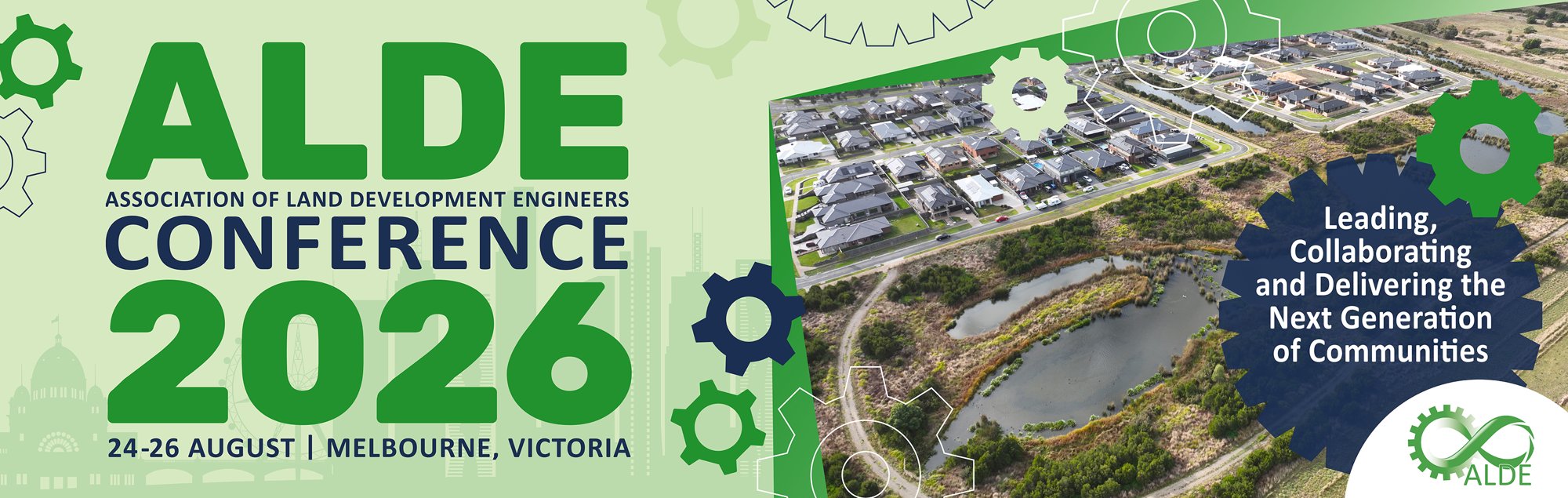
Jamie returned as Conference Chair for ALDE’s next conference. With 2024 having proved the demand, this one was easier to run but carried more pressure: the industry now expected it, and the expo needed to be more resolved. The theme was Leading, Collaborating and Delivering the Next Generation of Communities. It was another great success, bringing together 208 people from 83 organisations, with 21 sponsors and exhibitors, across three streams, six keynotes and the Great Debate.
Water That Works: an industry update and a look inside wetland design
Invited presentation to a planning and design practice, July 2026
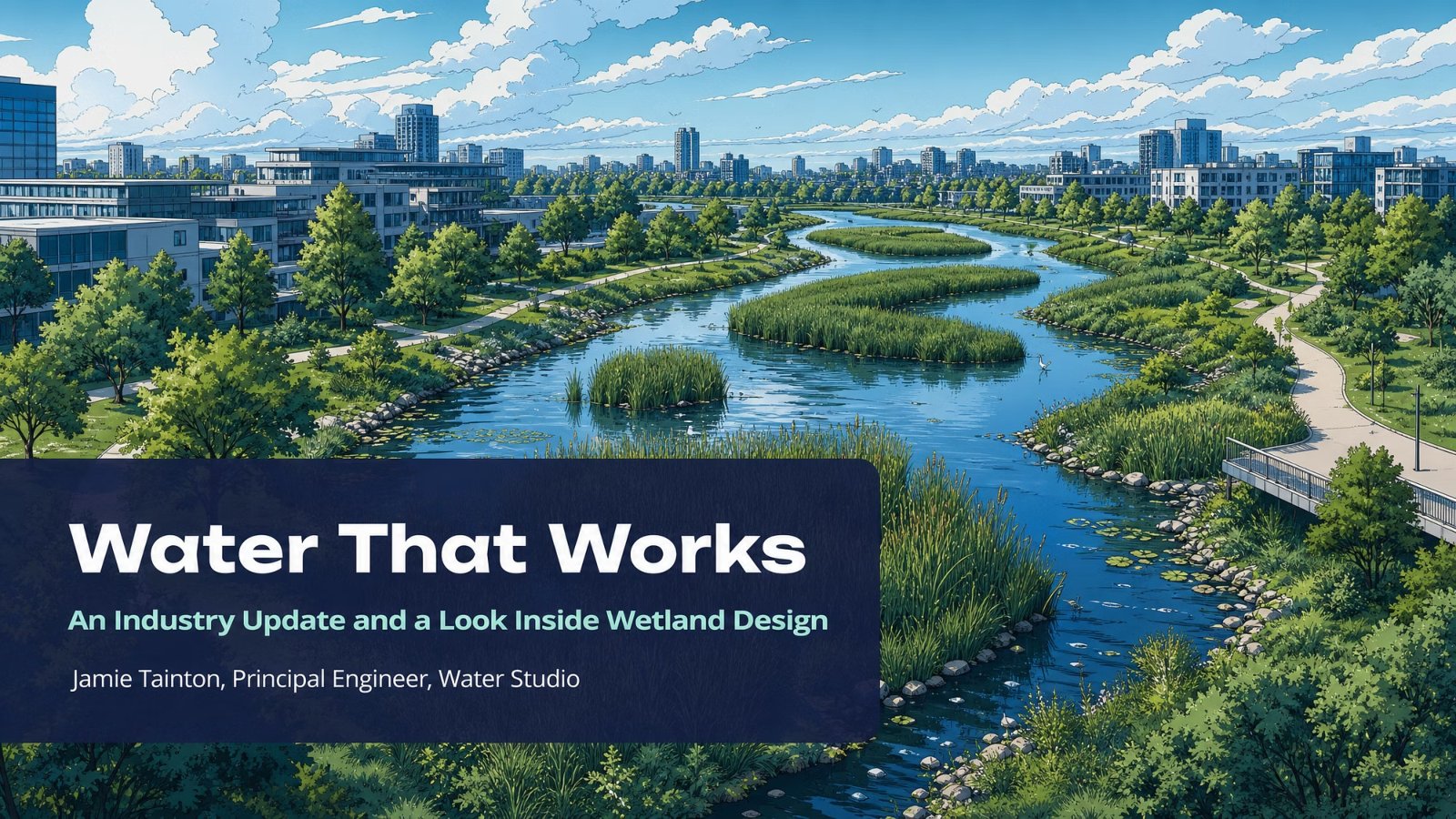
An hour in three parts. First, an update on the stormwater regulation changes now reaching designers’ desks in Victoria, including flow targets moving into the planning provisions. Second, a look inside the industry panels and working groups where drainage and flooding guidance is being decided, from Jamie’s seat at those tables. Third, what makes a constructed wetland actually work: the design decisions that let it treat water well and still be a place people want to spend time.
Is Victoria flooded with drainage guidelines? The case for VUDM
Keynote, IPWEA Public Works Conference Victoria, 14 May 2026
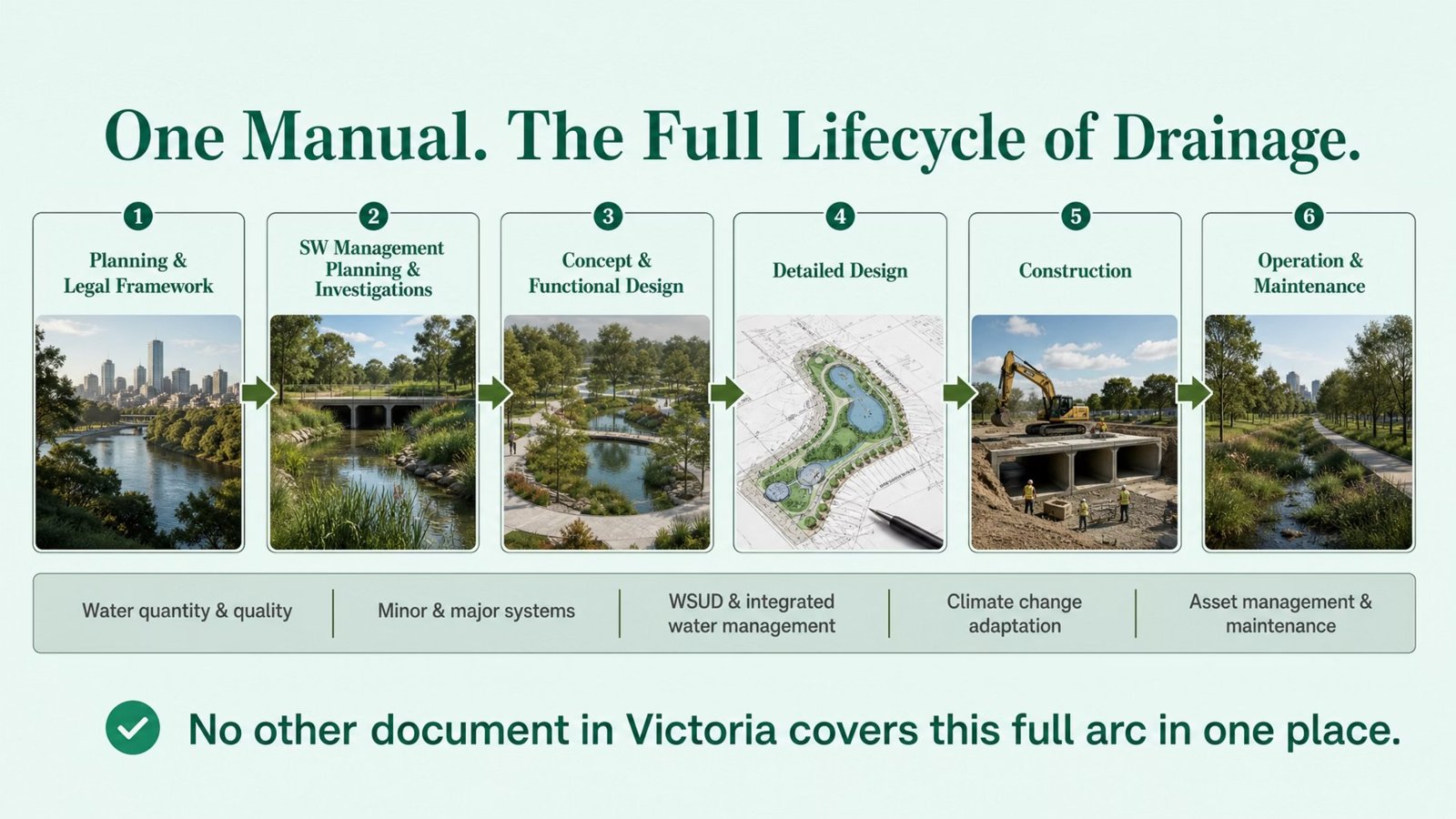
Drainage design in Victoria draws on a patchwork of documents: Australian Rainfall and Runoff, the Infrastructure Design Manual, the Engineering Design and Construction Manual, Melbourne Water’s guidelines and dozens of council standards. Each is useful, but there is no single statewide manual that brings them together. This keynote made the case for the Victorian Urban Drainage Manual (VUDM), which Stormwater Victoria and ALDE are developing as a practical how-to resource covering the whole life of a drainage asset, from planning through design and construction to maintenance. It also invited councils, authorities and practitioners to help shape the chapters still to come. Jamie’s role in the manual is described on the Board Roles page.
Drivers for delivery of good water sensitive urban design across Australia
Clearwater, 31 October 2024
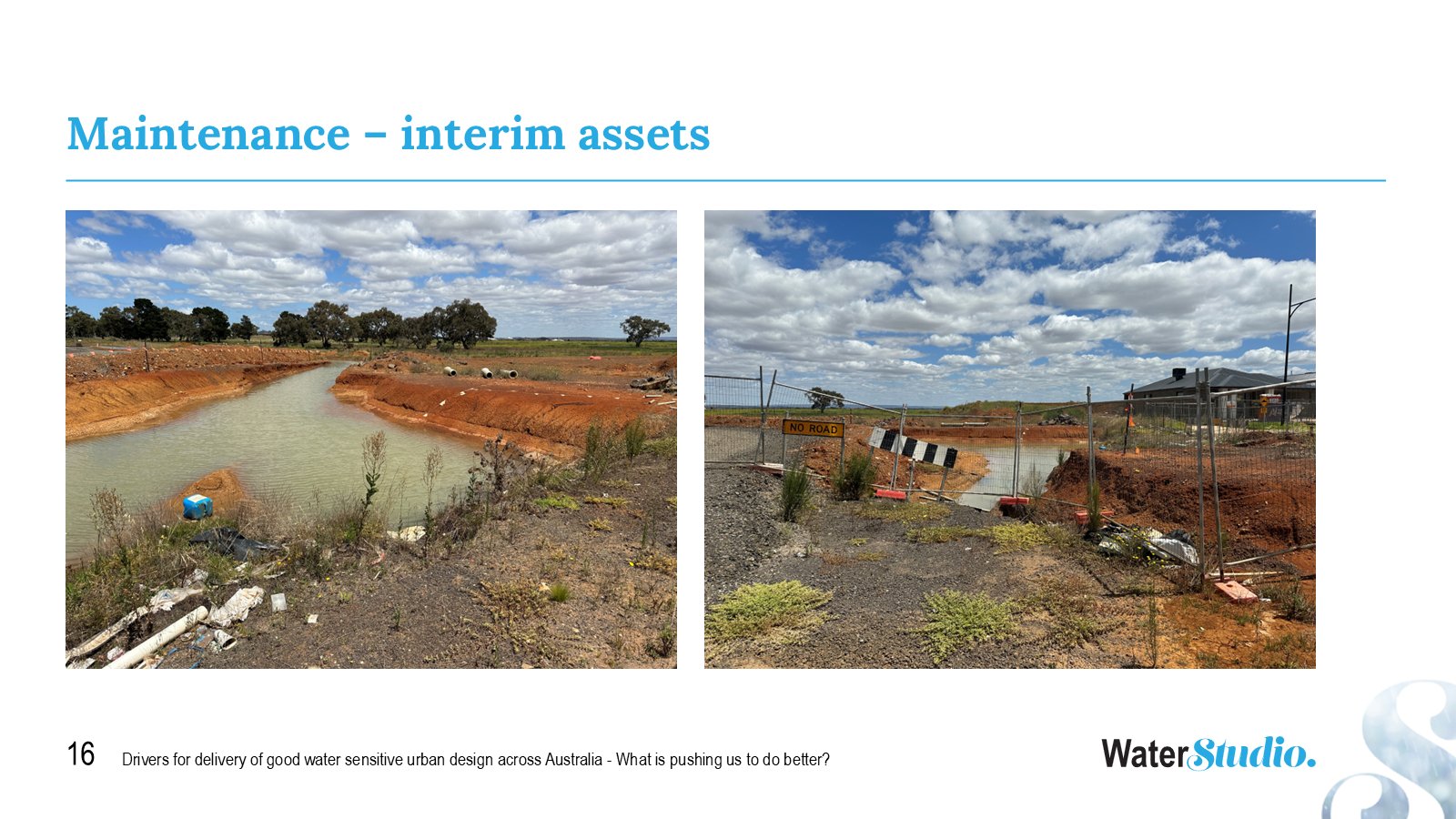
What pushes the industry to deliver better water sensitive urban design, and what keeps it working long after handover? This talk traced the drivers from the planning scheme and drainage schemes through Melbourne Water’s incentive programs and Greater Western Water’s integrated water management requirements, then turned to maintenance. The conclusion: lasting results need a champion who genuinely cares, solutions that fit the site, and the knowledge to innovate, because one size does not fit all.
Conference Chair: ALDE 2024 Conference
Association of Land Development Engineers, Mantra Lorne, 19 to 21 August 2024

Victoria’s land development engineering industry had not held its own conference in 20 years. As Conference Chair, Jamie started it up again from a blank page: the program, the speakers, the sponsors and exhibitors, and the case for why an industry this busy should stop for three days and talk to itself. The theme was Connecting the Pieces: Crafting the Future of Land Development. It was a big challenge and a huge success. 150 people came to Lorne, and delegates rated the organisers 4.7 out of 5.
Drainage: a briefing for the Valuer-General Victoria
Valuer-General Victoria, Urban Discussion Group, 24 July 2024
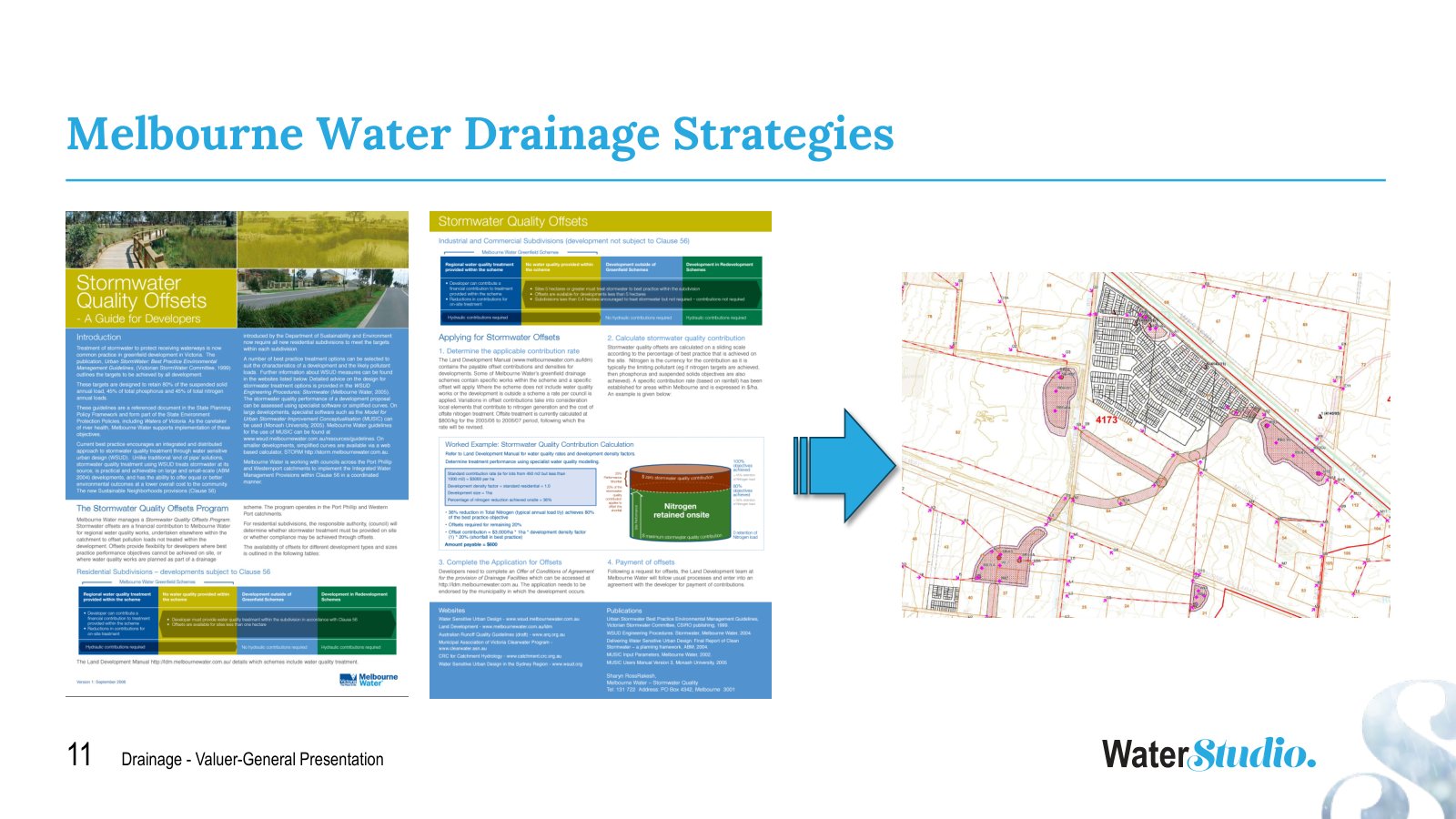
An invitation to explain to Victoria’s valuers how drainage shapes what land is worth. Jamie covered the planning controls and flood overlays that trigger stormwater requirements, how Melbourne Water drainage schemes and their contributions work, and why newer waterway health targets are asking more of developable land than they used to.
When drainage schemes, strategies and plans are forgotten
Stormwater Victoria Conference, 4 June 2024
Drainage strategies are written on the assumptions of their day, approved, built around, and then largely forgotten. Using two Melbourne case studies followed through more than a decade of change, this talk showed what happens when development moves past the original assumptions and nobody goes back to check. The message for the industry: look at the history, understand the intended strategy, test whether the assumptions still hold, and remember the duty of care owed to clients and the community.
Aitken Creek co-design workshop
Melbourne Water, 23 November 2023
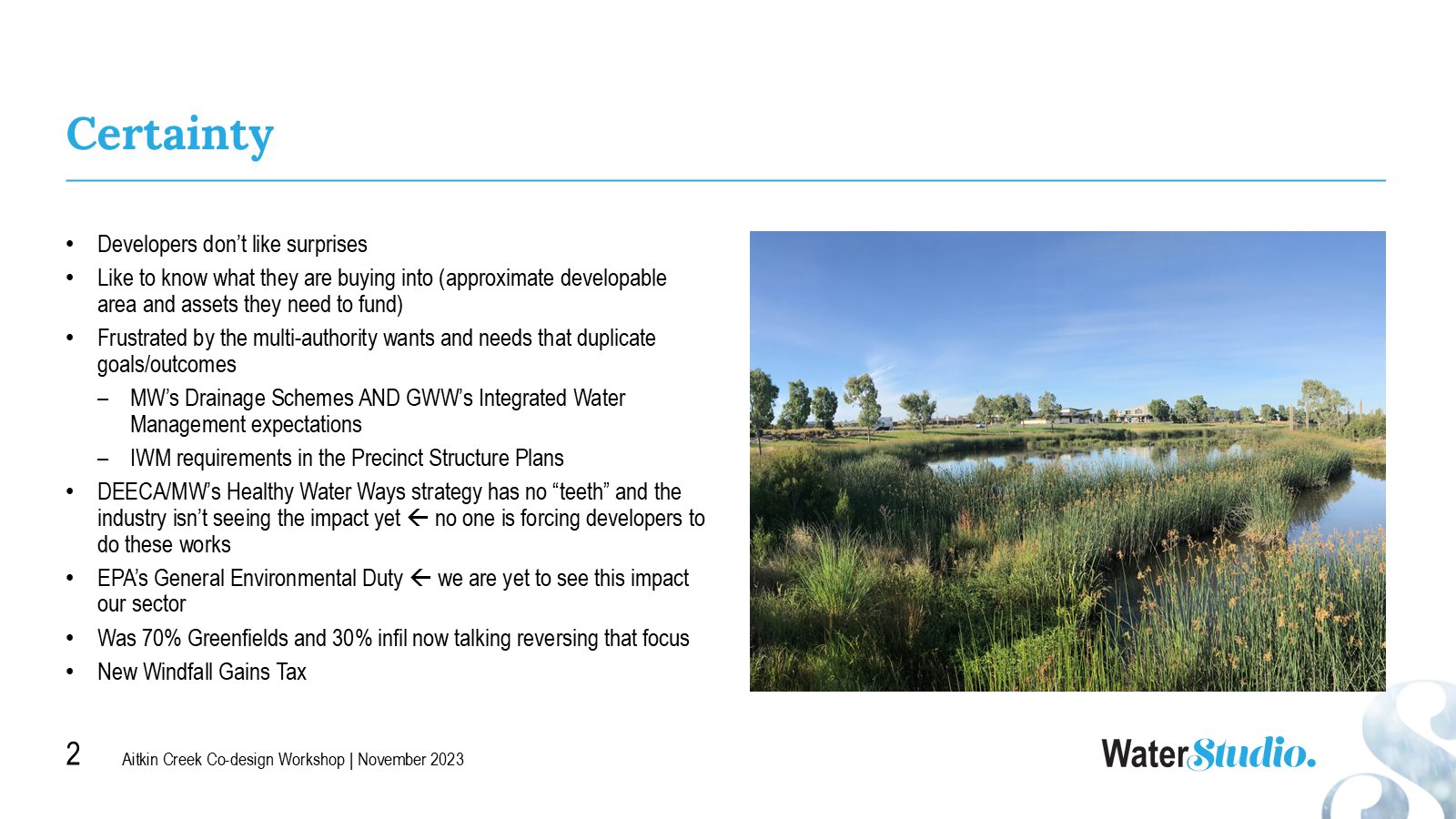
Jamie presented the land development perspective at Melbourne Water’s co-design workshop for Aitken Creek: what developers need from a drainage plan to deliver it well, including certainty, sensible staging and a fair answer to who pays.
The holes in Clause 53.18
Stormwater Victoria Conference, Geelong, June 2022
Clause 53.18 brought stormwater management into planning decisions for commercial, industrial and infill development. This talk set it against the long-standing residential provisions of Clause 56.07 and looked at where the clause’s intent and what actually gets built can drift apart, across industrial, civic and domestic development, along with what planners and engineers can do to close those gaps.
Collaborating through integrated water management: a very muddy case study
Stormwater Victoria Conference, Geelong, June 2022
Integrated water management only works when authorities, councils, developers and their consultants pull in the same direction. This talk was a candid look at what makes that collaboration hard, even when every party starts out enthusiastic: communication between teams, shifting responsibilities, and agreeing who carries the risk and the cost.
Melbourne Water drainage schemes: friend or foe?
Stormwater Victoria Conference, Marysville, June 2019
Drainage schemes have shaped growth-area development around Melbourne since 2003, funding shared drainage assets through developer contributions. This talk looked at how well they were working in practice, and asked whether the model should extend to commercial and industrial land as stormwater requirements reached those sectors. The answer was yes, but smarter and more integrated: proper credit for on-lot and integrated water management measures, dual-use assets such as retarding basins on sporting fields, closer collaboration between authorities, and consultation that genuinely focuses on outcomes.
Where it started: rainwater tanks as stormwater detention at VCAT
Ricci v Maroondah CC [2006] VCAT 2051, Victorian Civil and Administrative Tribunal, September 2006
Early in Jamie’s career, Jamie supported Dr Peter Coombes with the modelling behind the expert evidence Dr Coombes gave in this Tribunal review. Council wanted a conventional on-site detention system for a two-lot development in Ringwood East. The continuous simulation modelling showed that rainwater tanks plumbed for toilet flushing and garden use could bring peak stormwater discharges below the council’s target, while cutting household mains water demand by about a third. The Tribunal accepted rainwater tanks as stormwater detention, with part of each tank freely draining so storage is always available, and found that planning policy should favour them over conventional detention because of their wider environmental benefits.
The decision helped set the precedent for rainwater tanks as detention in Victoria, and it set the direction of Jamie’s career: finding practical ways to develop land while protecting the environment downstream. Jamie has continued to learn from Dr Peter Coombes ever since. Read the decision (PDF).
Presenting and training are part of Water Studio’s capacity building work. Interested in one of these topics for your team, council or association? Get in touch.