
Caring Farms Co-op is an inclusive urban farm in Greensborough. It was set up in 2014 to give people with disabilities a place of work and agency, and it runs a market garden and native plant nursery on what was once an unused, overgrown road reserve.
When the co-op needed plans to meet its planning permit conditions, Professor Tim Fletcher of the University of Melbourne asked Jamie Tainton whether Water Studio could help. Jamie said yes, and donated all the time on the project free of charge.
What the farm needed
The farm’s planning permit, granted through VCAT, came with conditions. The co-op had to lodge amended layout plans and a landscape plan with Banyule City Council by 12 July 2026.
The landscape condition asked for more than planting. It wanted to see how the farm responds to water sensitive urban design principles: how stormwater would be mitigated, captured, cleaned and stored for use on site, and where the irrigation and rainwater tanks would go.
How we helped
Before drawing anything, Jamie spoke with Banyule City Council to understand what its engineering, landscape and approvals teams would look for. Council’s Urban Food Strategy, which the farm helped shape, gave the project a strong footing.
After a site visit with the co-op in June, Jamie worked alongside the farm’s town planner and a traffic engineer to turn the farm’s layout into one coordinated plan set. The plans cover the existing site, the general layout, planting and materials, the storage shed and the farm-gate signage. They set out customer and staff parking, a 1.5 m accessible path of compacted granitic sand as the farm’s central spine, the farm-gate stall, a container dome store, and a 2 m planted buffer along the boundary.
Keeping the water on the farm
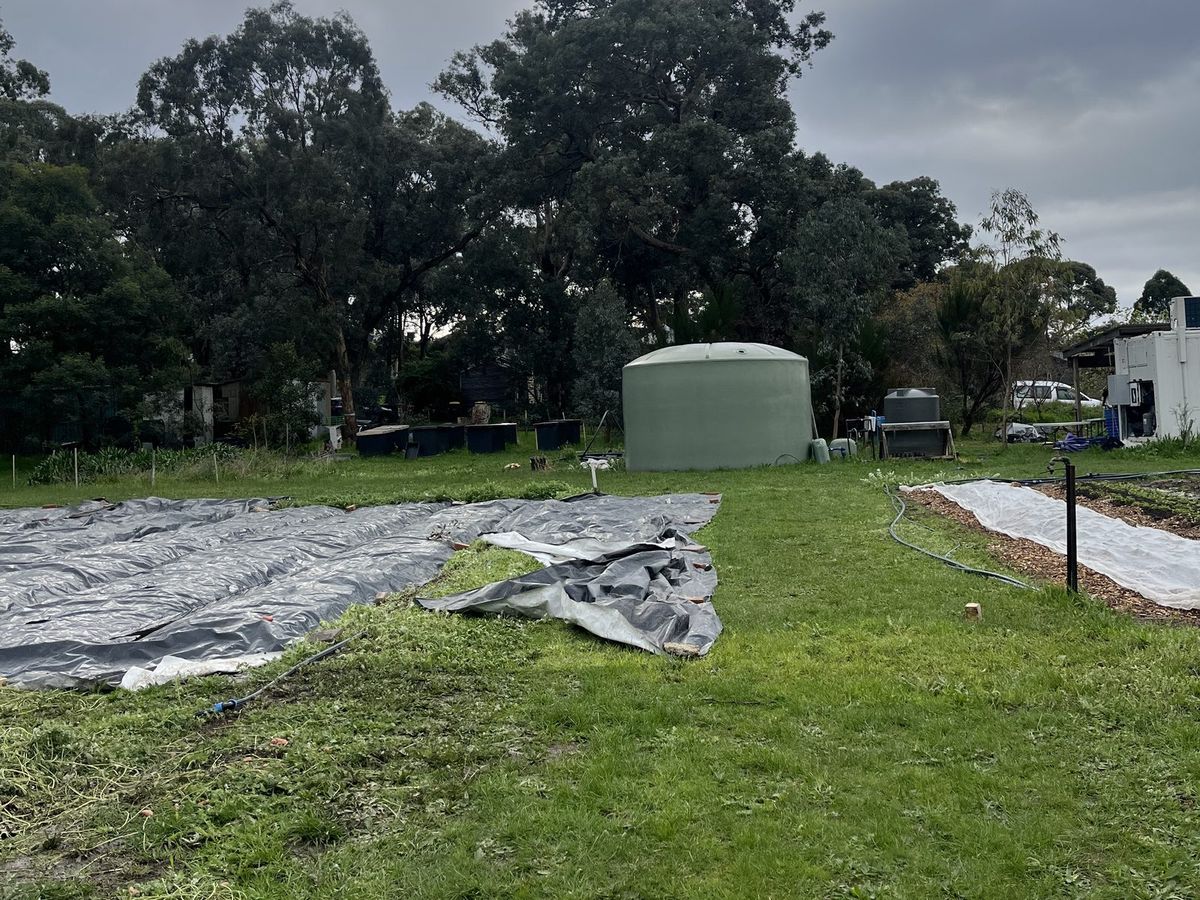
The farm already had the right instinct: capture the water from its hard surfaces and use it back on the crops. The plans build on that. Roof water is harvested for irrigation, with the existing 30 kL tank relocated to suit the new layout. Runoff is cleaned in vegetated swales and planted areas that slow it down and reduce what leaves the site. The swales are planted with indigenous species chosen with the farm, including Common Spike-sedge, Marsh Club-sedge, Purple-sheathed Tussock-grass and Brown-back Wallaby-grass.
The planning team wanted a lean town planning set, so the plans lodged with Council show only what the permit asks for. The fuller stormwater design sits in the background as a resource the farm can build from as it grows.
The final plan set came together over a weekend to meet the deadline.
Next steps
With the permit plans done, the focus now turns to paying for the works. Water Studio is helping the co-op look at funding applications, starting with Melbourne Water’s incentives program for projects that improve stormwater quality and waterway health.
We’re also watching for other funders and grant rounds as they open. Where the farm is eligible and an application is realistic for a small community co-op to take on, we’ll help put it together.
Read Banyule City Council’s interview with Caring Farms Co-op, including the farm’s grassy woodland restoration work.