
Rural Lands Program
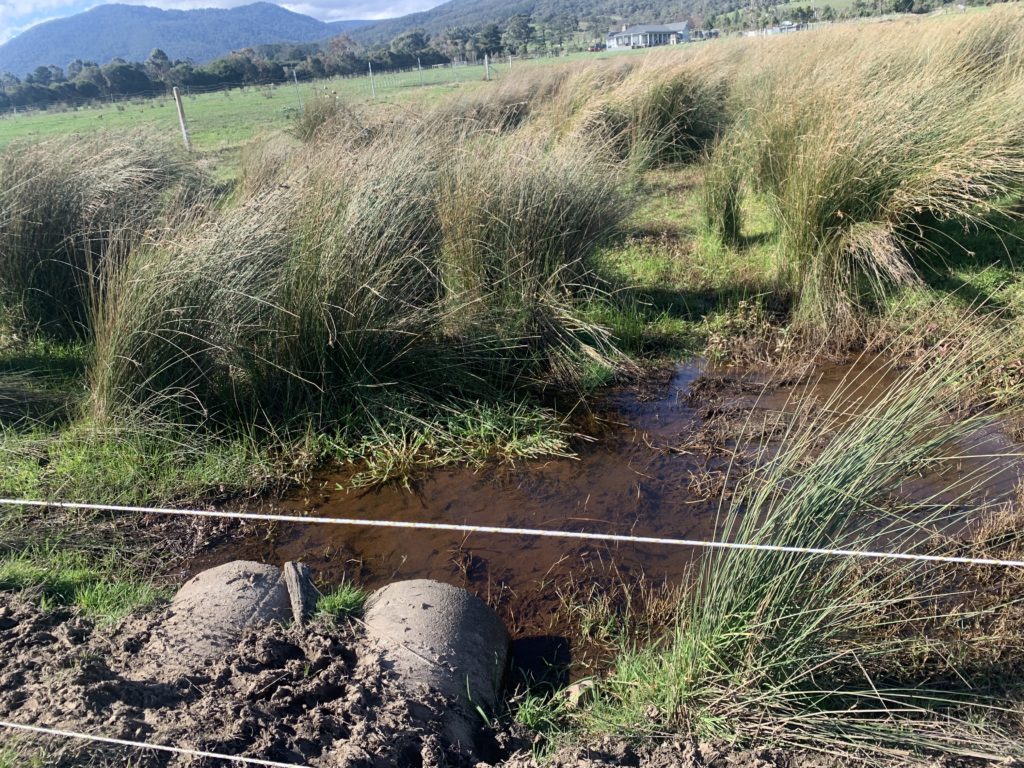
Jamie Tainton has enjoyed working with the Liveable Communities Liveable Waterways Program at Melbourne Water (previously the Rural Lands Program) over the years. From strawberry and raspberry growers in the Yarra Valley, Container Nurseries in the hills, to dairy farmers in gippsland, the variety and breadth of work is phenomenal. The intention of the program is to create an opportunity to share knowledge and improve the practices of agricutlural properties in small bites. The idea being that many small bites of improvement in a waterway will lead to a much healthier system in the longer term. Projects have included the development of site Stormwater Management Plans, catchment diversions to improve dam yield, sealing dams, track improvements, drainage augmentation, improving irrigation practicies, rural waterway crossings and water balance assessments to determine efficient water use. The list is endless and extremely satisfying.
Revisiting the Chirnside Park Green Spine
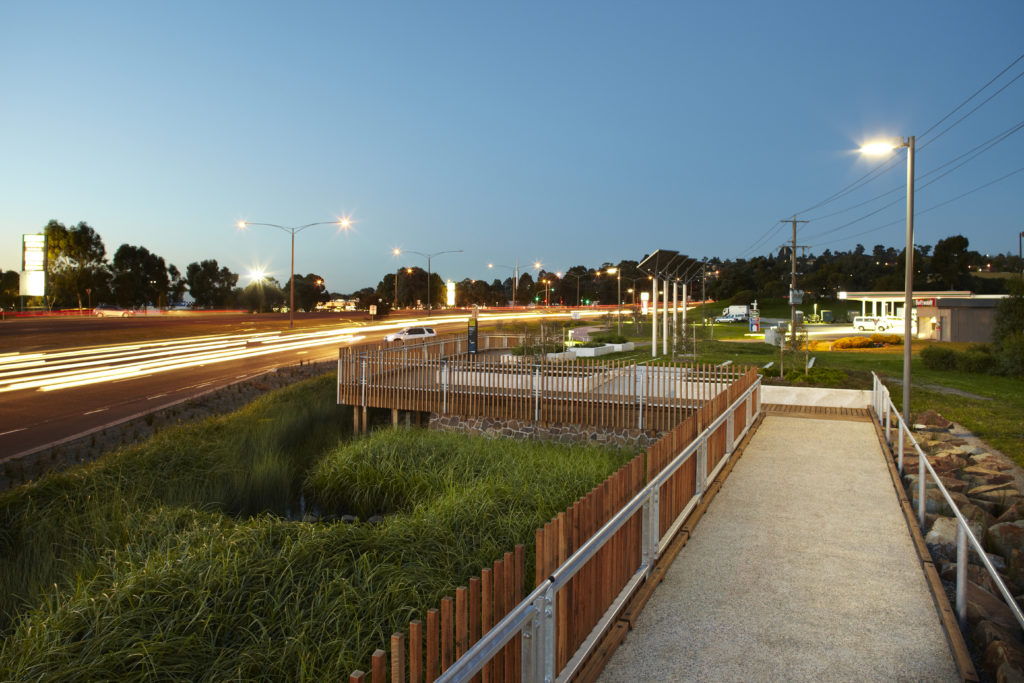
The Green Spine was a Shire of Yarra Ranges project where Jamie Tainton (while at Storm Consulting) worked with Aspect Studios on a Green Gateway along the Maroondah Highway between Bushy creek in the west to the Chirnside Park Shopping Centre in the east. The intention of the project was to construct a 3m wide shared pathway along this length with key features that encouraged community interaction and engagement. The path was to included Water Sensitive Urban Design (WSUD) elements to offset the increased impervious footprint. The project also included vast planting of local trees and vegetation to accentuate the intention of the overall “Green Spine”. The project won a Melbourne Design Award in 2011 for its response to the design challenges of the project, the sustainability focus and connection to the local community. The shared pathway was aptly named after local indiginous leader William Barak and creates strong links to the importance he had for the local community. “William Barak was born into the Wurundjeri clan of the Woi wurung people in 1823, in the area now known as Croydon, in Melbourne. Originally named Beruk Barak, he adopted the name William after joining the Native Police as a 19 year old. Barak was an activist, an artist, a cultural ambassador and an educator” University of Melbourne In returning to the site over 10 years after its installation, we can see how well the vegetation is doing in the ephemeral wetland and bioretention areas. The imagery below highlights the difference and how the fencing has weathered, how the vegetation has grown, and genrally how well its fairing. The pockets of bioretention are scattered along the full length of the project taking polluted runoff from the roadway into the vegetated areas. The stormwater diversions have held up well however we’d look to improve the aesthetic of their design in future projects. The decking in the original boardawalk is starting to look tired and could do with a refresh. Perhaps a modwood might last longer if replaced? While reviewing the site we saw numerous walkers commuting along the pathway including the elderly on scooters appreciative of the hardstand connection. It was wonderful seeing the assets being used an appreciated by the community.
Revisiting the Chirnside Park Main Drain
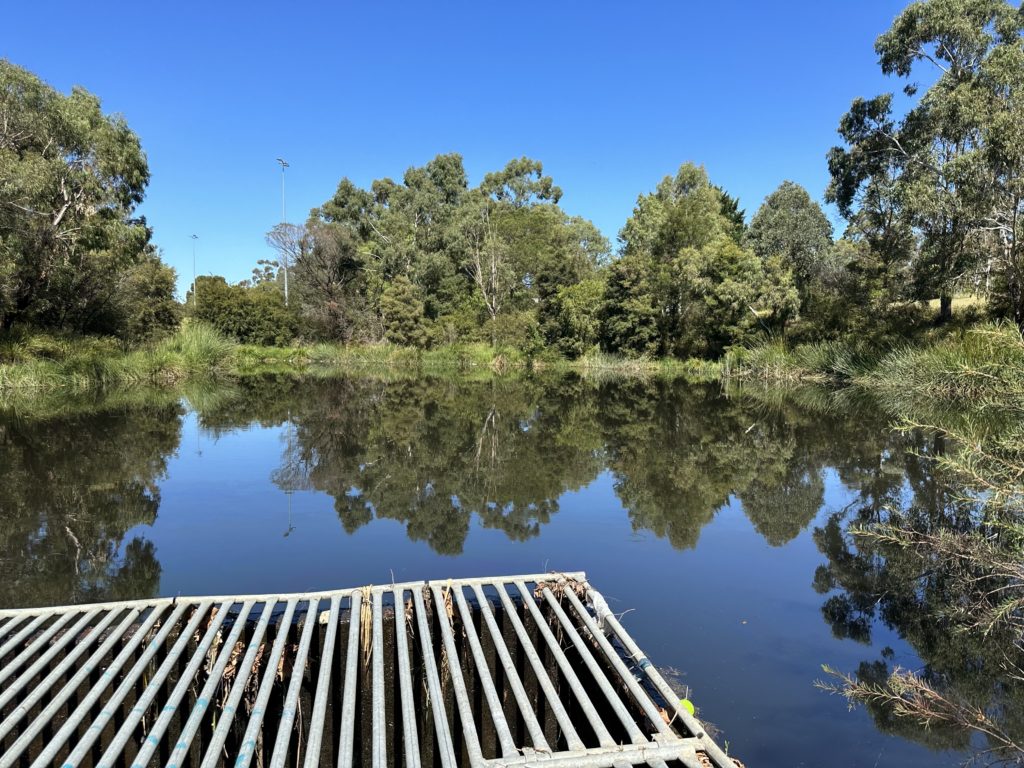
In 2005, the Chirnside Park Main Drain was built after a year of organisation, collaboration and design. The design looked like the image below and incorporated an existing basket based gross pollutant trap (GPT). An effective diversion ensures the right flows are sent into a sediment basin and the rest are bypassed around. This project was constructed online and included a series of wetland cells, a pool and riffle system, ending in a retarding basin with wetland in the base. It was built as part of a low density residential project while Jamie was at Millar | Merrigan. Today we can see the vegetation has well established. The trees are providing great canopy and shade cover for lower levels of vegetation surrounding the waterbodies and waterway. The ephemeral vegetation is dense and has great habitat value protecting local fauna from predators. Throughout the visit, we saw numerous forms of wildlife across the site. A handmade sign highlighted snakes were also a common resident of the area. The site is looking great after almost 20 years in the ground. The local community has embraced the asset with numerous walkers, joggers and dogs ciruculating on the tracks as we walked around. We are so proud of the asset and how it is so loved by those who use it.
South Yarra Urban Wetlands
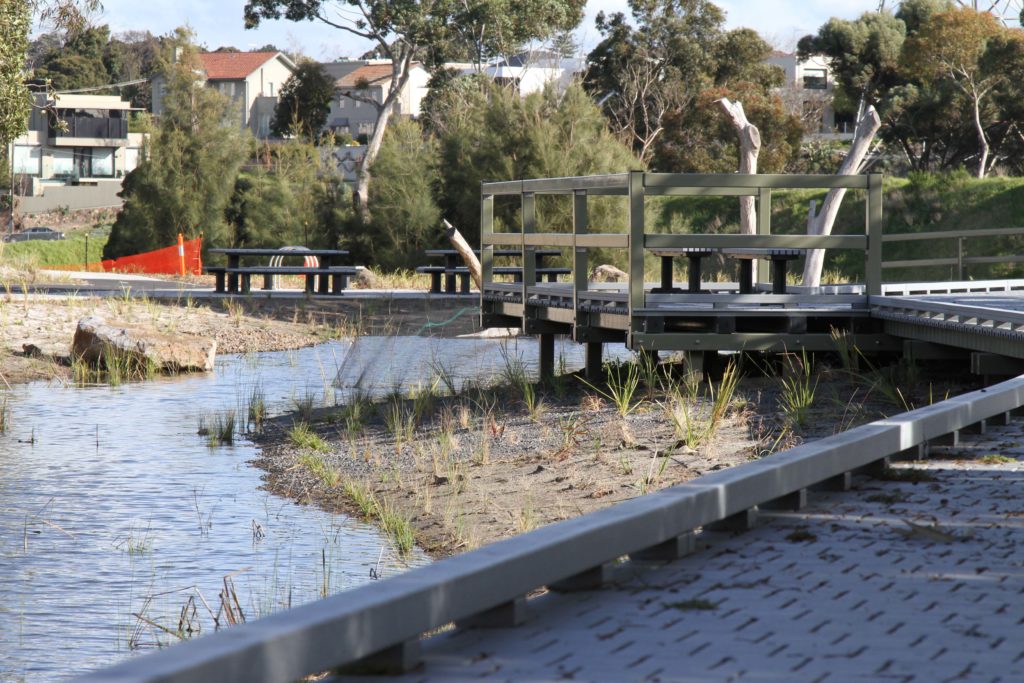
This urban wetland was born out of the need for stormwater quality treatment to protect the Yarra and an available public space beneath the powerlines that was difficult to maintain. The stormwater drainage diversion is located on the very busy Grange Rd intersection where there was no clear spot for a truck to maintain it. Instead, a Hydrobrake unit was used to divert specifically limited flows in a large diameter pipe across the road to a GPT. This enabled the larger gross pollutants to be trapped in a location where access for removal was much more reasonable and practical. The wetland is edged in a recycled plastic boardwalk (modwood) so those passing by can appreciate the wildlife sharing the space. Jamie (while at Strom Consulting) managed and undertook the design of the system as a joint project with Melbourne Water and Stonnington Council. This project was funded under Melbourne Water’s Living Rivers program.
Passively Irrigating Street Trees
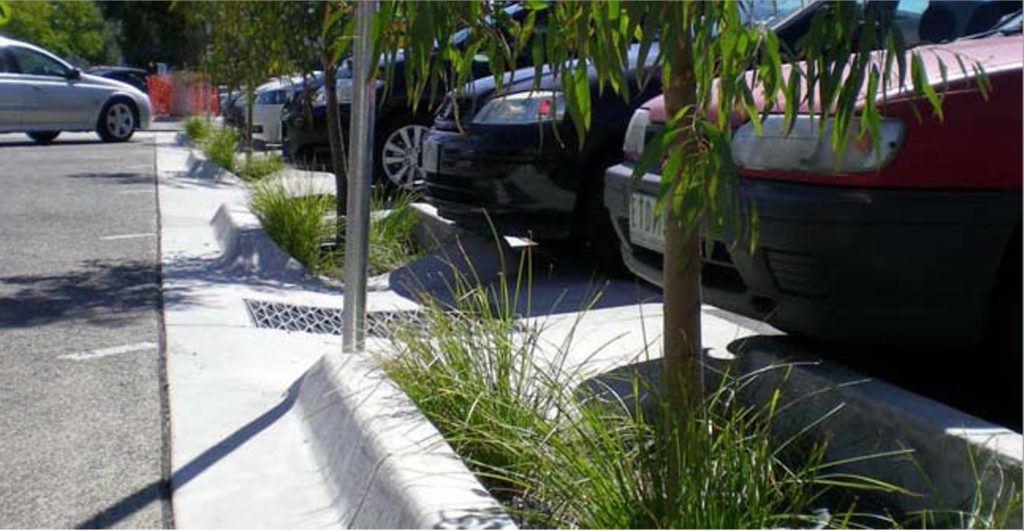
Jamie has worked on muliple Passive Irrigtion Projects. Some high profile and urban, some more mainstream in greenfields estates. Trees in urban environments often suffer and can result in stunted growth with limited root growth zones or access to moisture. We find most Council arborists are looking to passively irrigate their trees with more water in hope the next generation of trees thrive. Geotechnical testing is recommended on most projects to determine the infiltration rates of site soils. If they are found to be extremely slow (for eg, clay with sub 1mm/hr) an underdrain is often recommended. This ensures the trees are not waterlogged by the system providing them with too much water. If the adjacent road is a Vicroads Road (and heavily trafficed), it may require a continuous formal barrier kerb. If so, a lintel can be located on every diversion (this is generally a costly approach). Maintenance is always the deciding factor on these projects and we often include a sediment collection zone ease the impact in the longer term. In projects like this, Jamie happily works with the full project control group to establish the ultimate outcome (water for trees), design (diversion and monitoring systems), ensure maintenance needs are met (in line with other council practices) and have the assets constructed (supported the contractor during construction). More information can be found on the Tanderrum Way project here.