
Revisiting the Chirnside Park Green Spine
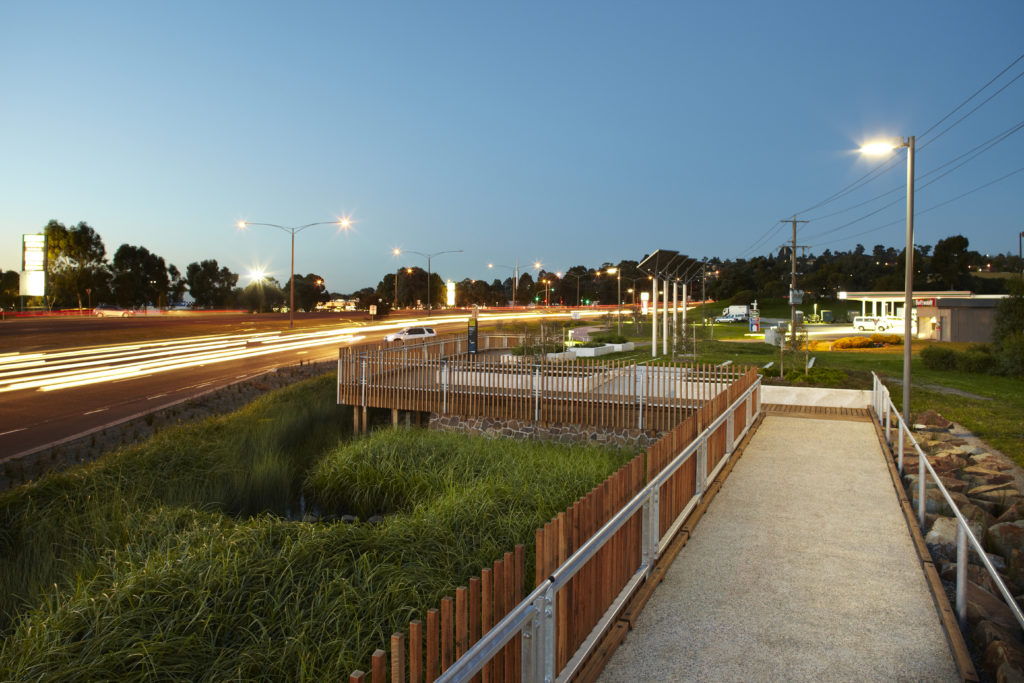
The Green Spine was a Shire of Yarra Ranges project where Jamie Tainton (while at Storm Consulting) worked with Aspect Studios on a Green Gateway along the Maroondah Highway between Bushy creek in the west to the Chirnside Park Shopping Centre in the east. The intention of the project was to construct a 3m wide shared pathway along this length with key features that encouraged community interaction and engagement. The path was to included Water Sensitive Urban Design (WSUD) elements to offset the increased impervious footprint. The project also included vast planting of local trees and vegetation to accentuate the intention of the overall “Green Spine”. The project won a Melbourne Design Award in 2011 for its response to the design challenges of the project, the sustainability focus and connection to the local community. The shared pathway was aptly named after local indiginous leader William Barak and creates strong links to the importance he had for the local community. “William Barak was born into the Wurundjeri clan of the Woi wurung people in 1823, in the area now known as Croydon, in Melbourne. Originally named Beruk Barak, he adopted the name William after joining the Native Police as a 19 year old. Barak was an activist, an artist, a cultural ambassador and an educator” University of Melbourne In returning to the site over 10 years after its installation, we can see how well the vegetation is doing in the ephemeral wetland and bioretention areas. The imagery below highlights the difference and how the fencing has weathered, how the vegetation has grown, and genrally how well its fairing. The pockets of bioretention are scattered along the full length of the project taking polluted runoff from the roadway into the vegetated areas. The stormwater diversions have held up well however we’d look to improve the aesthetic of their design in future projects. The decking in the original boardawalk is starting to look tired and could do with a refresh. Perhaps a modwood might last longer if replaced? While reviewing the site we saw numerous walkers commuting along the pathway including the elderly on scooters appreciative of the hardstand connection. It was wonderful seeing the assets being used an appreciated by the community.
Monitoring Outcomes of Projects
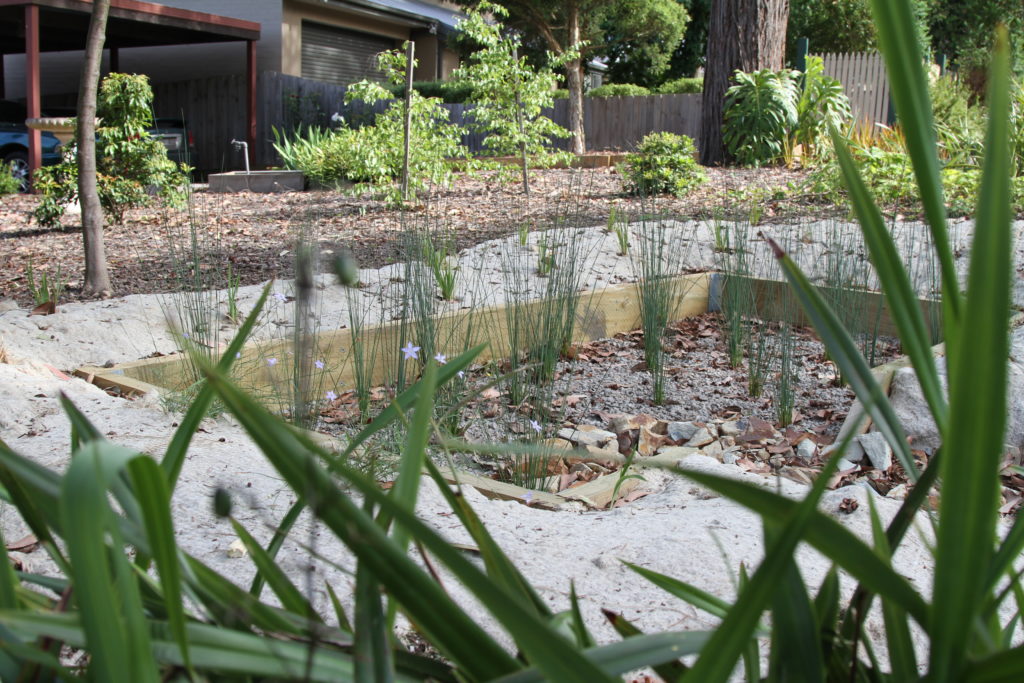
Jamie has worked with Melbourne University on numerous iniatives throughout her career. From the Little Stringybark Creek Project to passively irrigated street trees. With each of these projects, the monitoring of the systems was a vital component. It’s always great to talk over the requirements of monitoring with the team at Melbourne University and appreciate how we might design infrastructure that enables monitoring. Often additional pits and pipework are required for the University team to install weirs, data loggers and sensors. The orientation and size of this infrastructure is critical to get right and enable them to get the results we all need. The designs generally need to include duplicated systems (“controls”) that have no directly connected catchments to enable researchers to identify the impact of connected catchments. Sometimes that means installing the ultimate assets and blocking off the catchment during the monitoring period just to see how it goes. The satisfaction of this working relationship is the sharing of knowledge and the results. Every day we design new systems, but rarely we get the opportunity to have the design intent confirmed with real data.
Passively Irrigating Street Trees
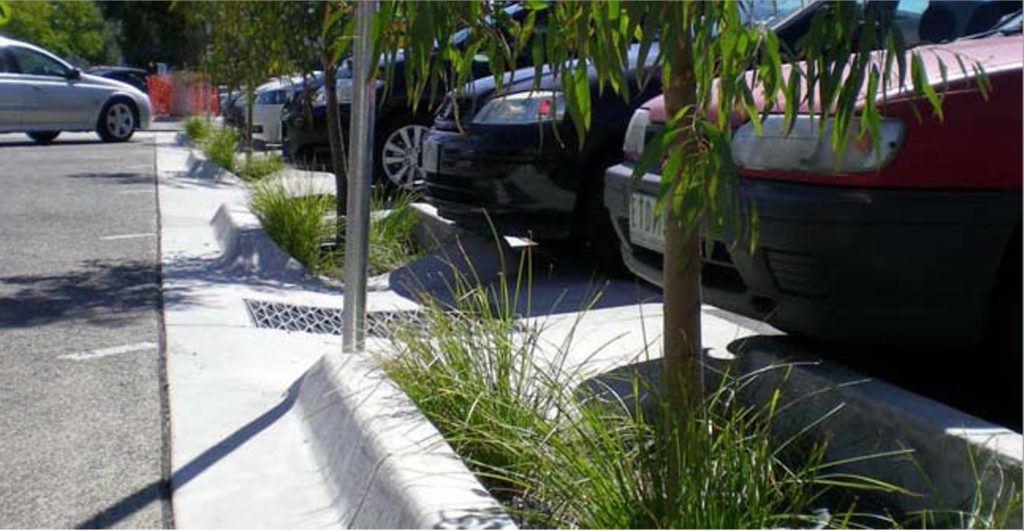
Jamie has worked on muliple Passive Irrigtion Projects. Some high profile and urban, some more mainstream in greenfields estates. Trees in urban environments often suffer and can result in stunted growth with limited root growth zones or access to moisture. We find most Council arborists are looking to passively irrigate their trees with more water in hope the next generation of trees thrive. Geotechnical testing is recommended on most projects to determine the infiltration rates of site soils. If they are found to be extremely slow (for eg, clay with sub 1mm/hr) an underdrain is often recommended. This ensures the trees are not waterlogged by the system providing them with too much water. If the adjacent road is a Vicroads Road (and heavily trafficed), it may require a continuous formal barrier kerb. If so, a lintel can be located on every diversion (this is generally a costly approach). Maintenance is always the deciding factor on these projects and we often include a sediment collection zone ease the impact in the longer term. In projects like this, Jamie happily works with the full project control group to establish the ultimate outcome (water for trees), design (diversion and monitoring systems), ensure maintenance needs are met (in line with other council practices) and have the assets constructed (supported the contractor during construction). More information can be found on the Tanderrum Way project here.
Darebin Passive Street Tree Watering
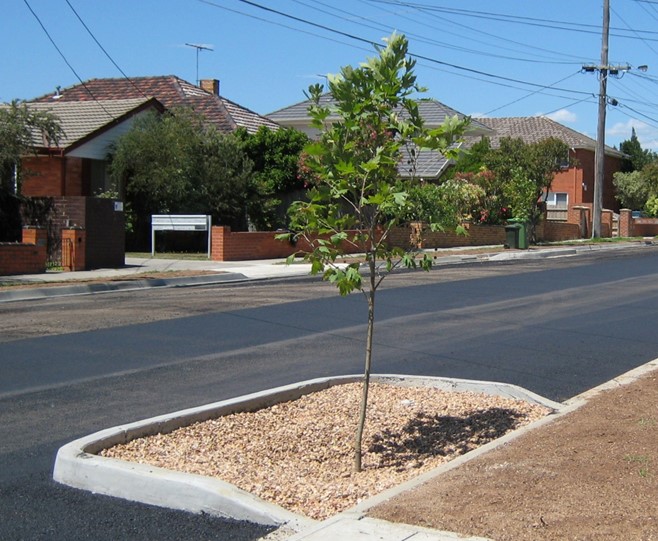
In this project when Jamie (while at Storm Consulting) assisted Darebin with their new tree plantings. They wanted to install new kerb outstands to control parking in the street and provide additional greening to their wide open streets. A simple fall out kerb was used on this occasion to tip water caught in the uphill kerb and deliver it overland to the tree. It was also utilised around existing street trees, where minor hand excavation established a gradual swale around the tree that encouraged water to fall out and irrigate the tree. The images above show the tree upon installation and the tree today.
Station North Urban Renewal Project
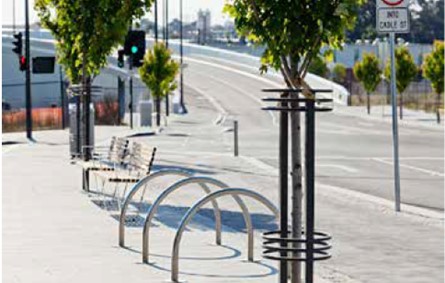
The Station North Urban Renewal Project (SNURP) was part of the Revitalising Central Dandenong Project by the Development Victoria (previously VicUrban). During this engagement new street trees were to be installed and passively irrigated along the length of the new road alignment. Jamie (while at Storm Consulting) undertook a water balance of specific tree species to determine an appropriate spacing of trees and tree choice based on that available catchment. Passive irrigation systems were then devised in a very urbanised environment that ensured pedestrian and cycle thoroughfare were safely maintained while the trees received adequate watering.